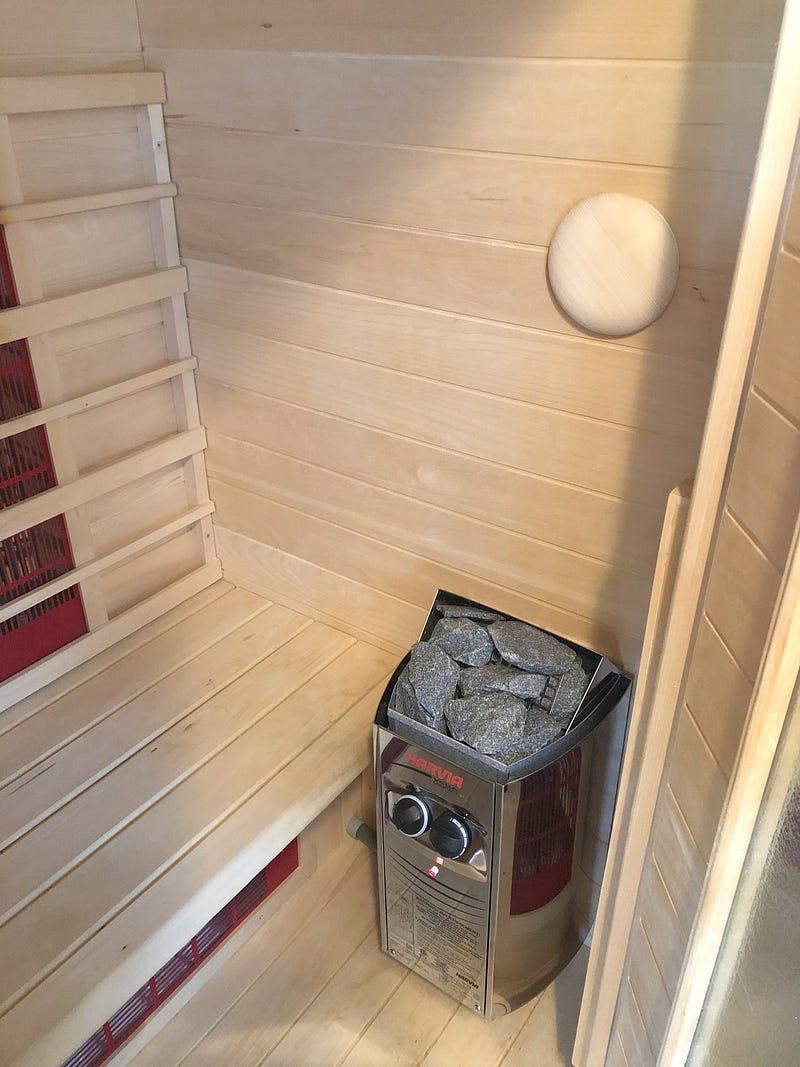
I bought a used ‘two-person’ infrared sauna in 2020 on Craigslist for around $500—super clean, very lighty used, no mold, no booty smell. Internal dimensions are approximately 5H x 4W x 3D (in feet) — or 60 cubic feet.
I have used it regularly from 2020–2024. I keep it in my home office. I love it and recommend the same purchase to everyone—but I just wanted it to be hotter. With infrared you sweat your salami puffs off, but it’s a bit of a different experience from a proper 165º+ dry sauna. I find infrared sauna makes my body feel a bit pressurized from the inside—almost making my body and mind feel a bit agitated—whereas regular sauna seems to be more relaxing and I feel much more calm after a session.
Being the under-estimator that I am, I says to myself “of course, no problem, I’ll just convert my infrared box to a traditional sauna with a small stone stove heater.” It was, like most personal projects, an enlightening pain in the tush. I’m very happy with the results, but dang — I tricked myself again!
Requirements:
- Heater must be 110V
- New heater must fit in my small infrared sauna box
- Must be safe?
*Full parts list with links at the bottom of this post
I looked everywhere for a heater. I saw a small 110V Vevor that seemed ok, but would just barely fit (safety?)—it also seemed sold out or out of production. I checked Alibaba and messaged some vendors—nothing productive came from that.
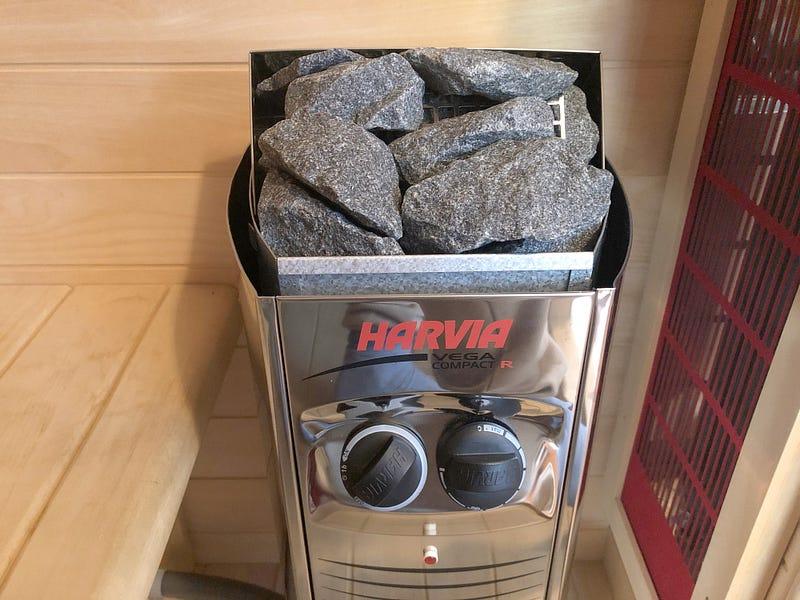
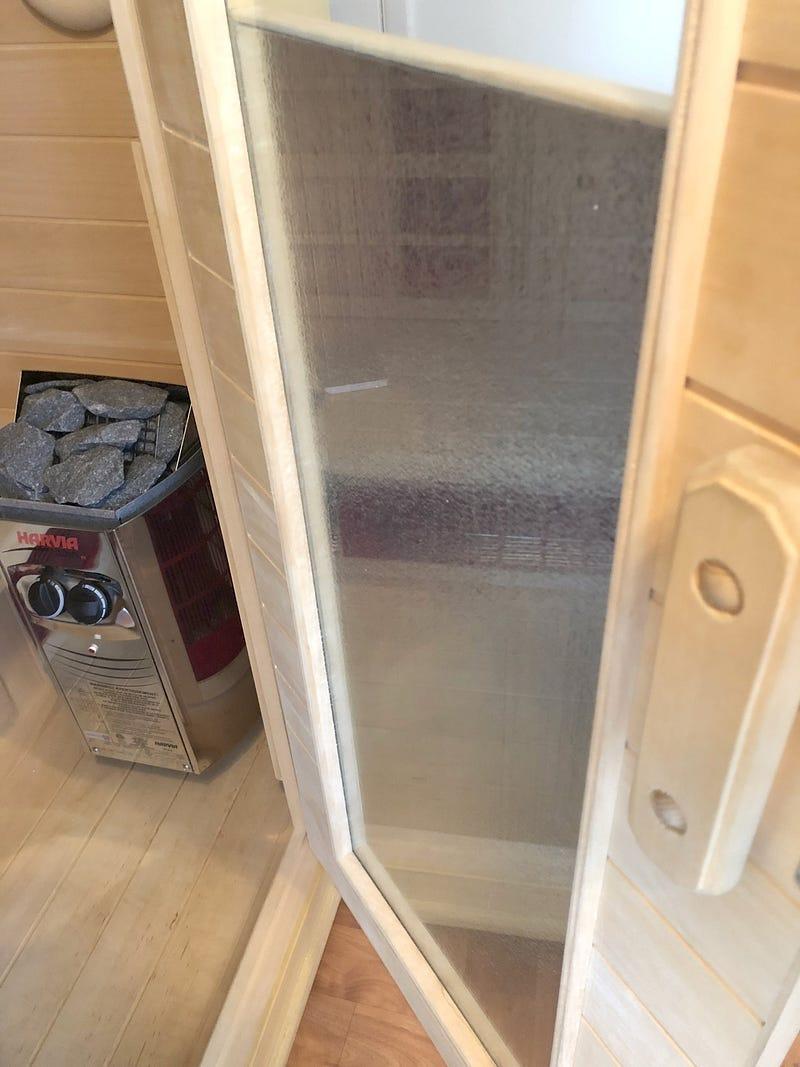
The only 110V heater I found to fit my requirements was the Harvia Vega Compact 1.9 KW heater (use discount code BELK for 7% off). It’s a beautiful design. I eventually ordered it from a vendor after weeding through the endless sea of sketchy sauna drop-shippers. The unit was ‘backordered for two months’ but actually just completely sold out, so I asked for a refund. I contacted the vendor again in two months—“oh, our bad, we received new stock but it sold out so quick,” probably a lie but whatever.
So I contacted Harvia through their website, “can you help me find a vendor with stock?” They connected me with a good vendor, and I ordered again—this time successfully.
My general strategy was as follows:
I used a 10 gauge extension cord and lopped off one end (extension cords are cheap, flexible, and nice to work with)
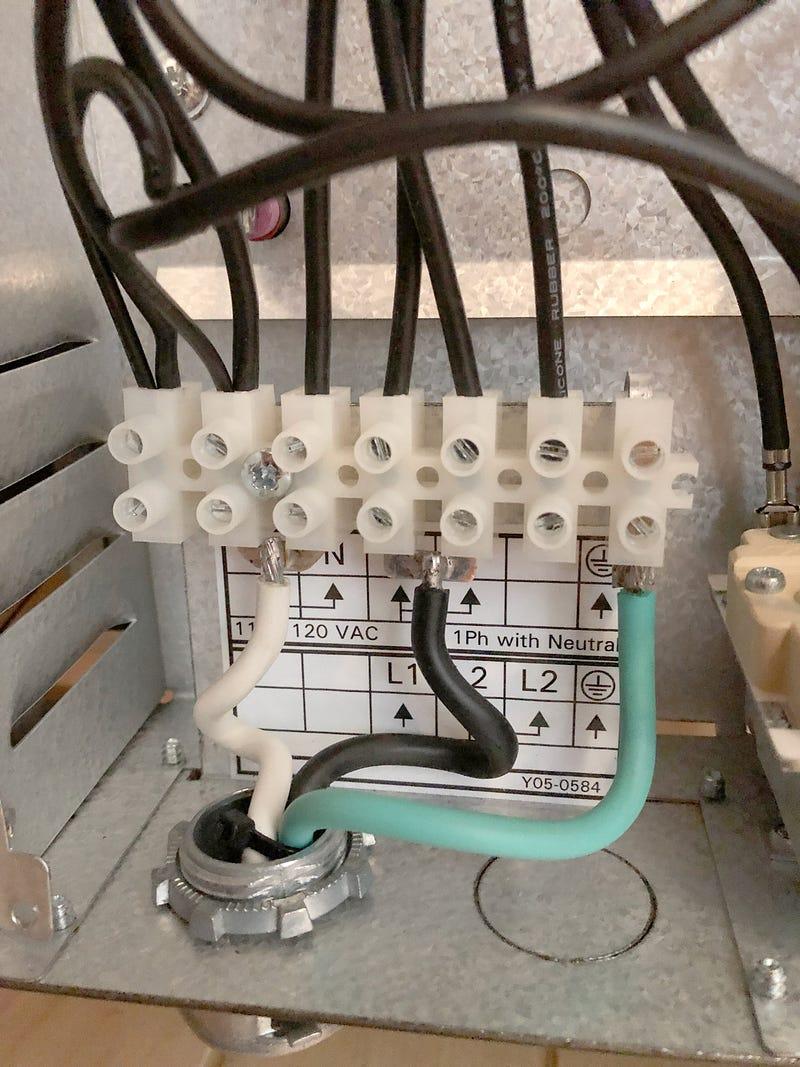
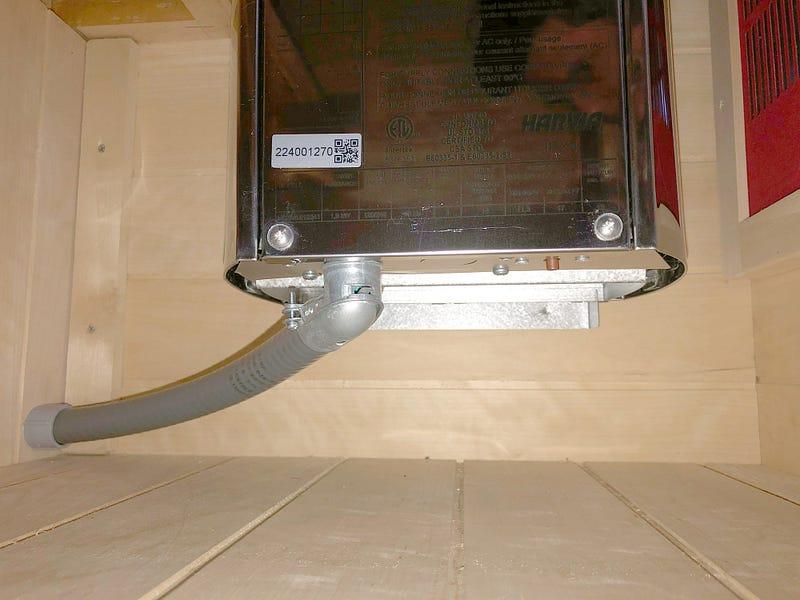
I used terminal blocks/busses with an inline 20A breaker for extra safety
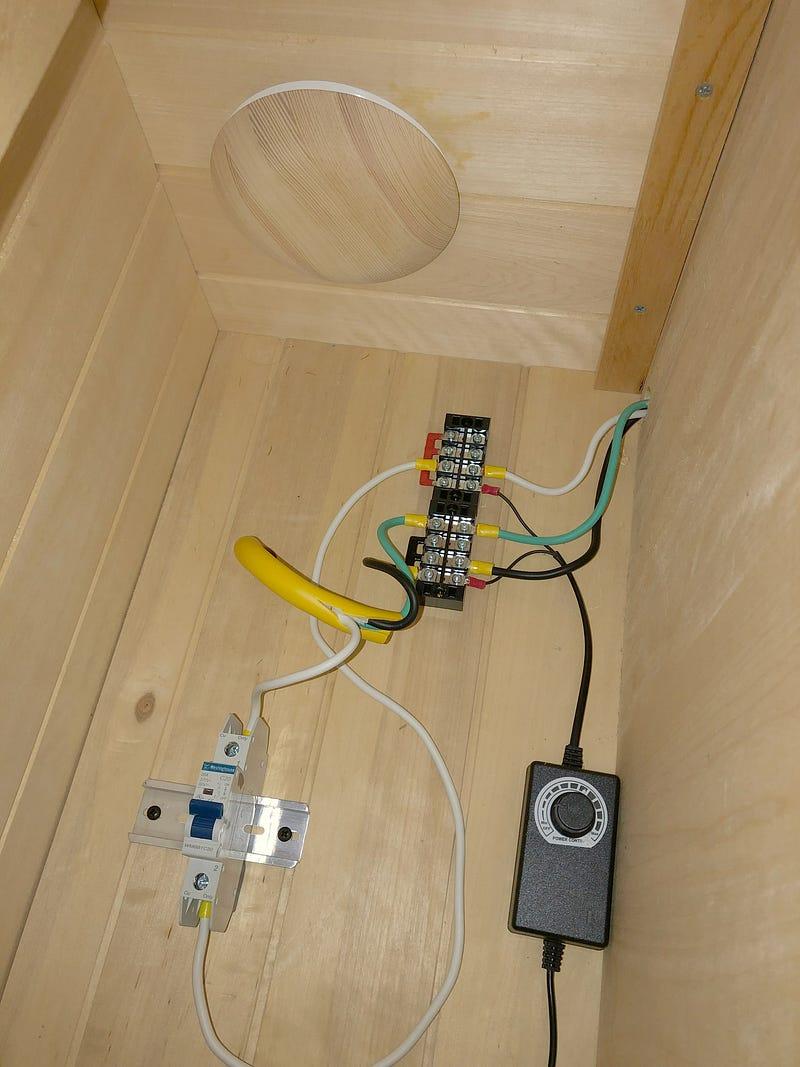
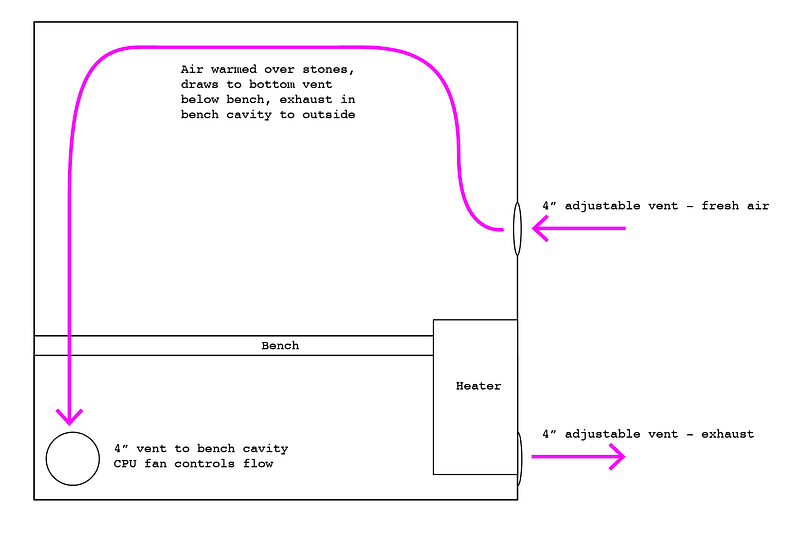
I used an adjustable CPU fan to provide appropriate airflow through the box, and indirectly through the conduit line to the internals of the heater
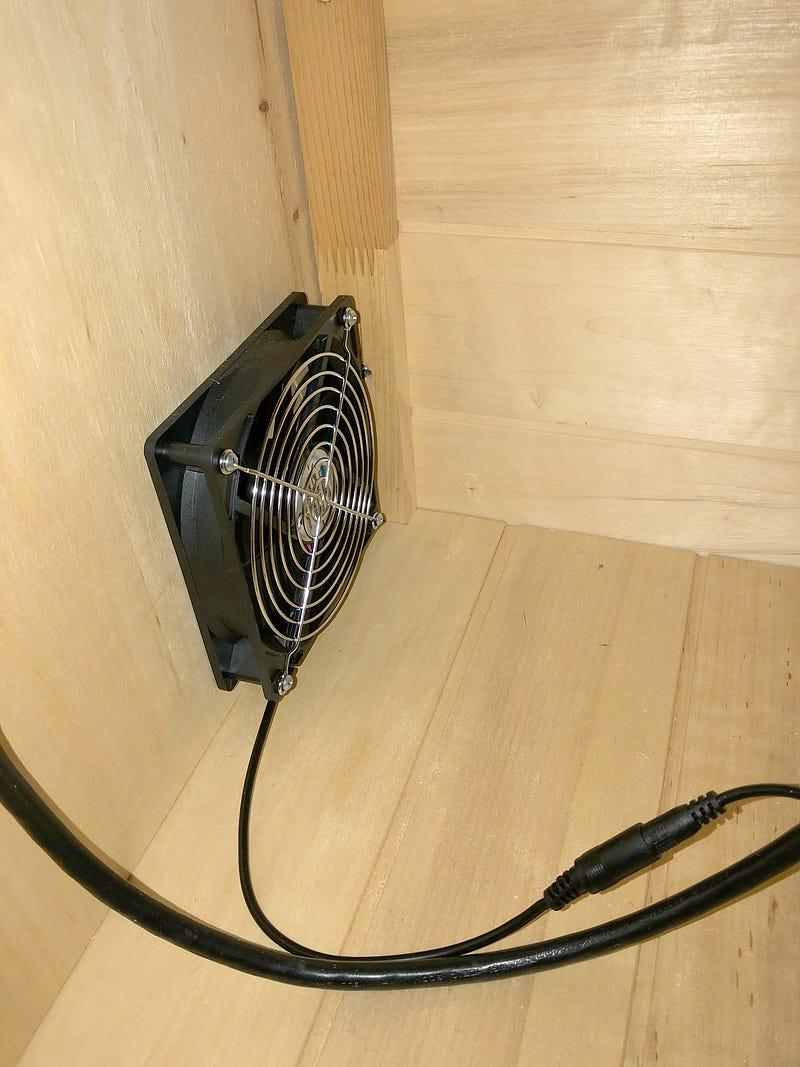
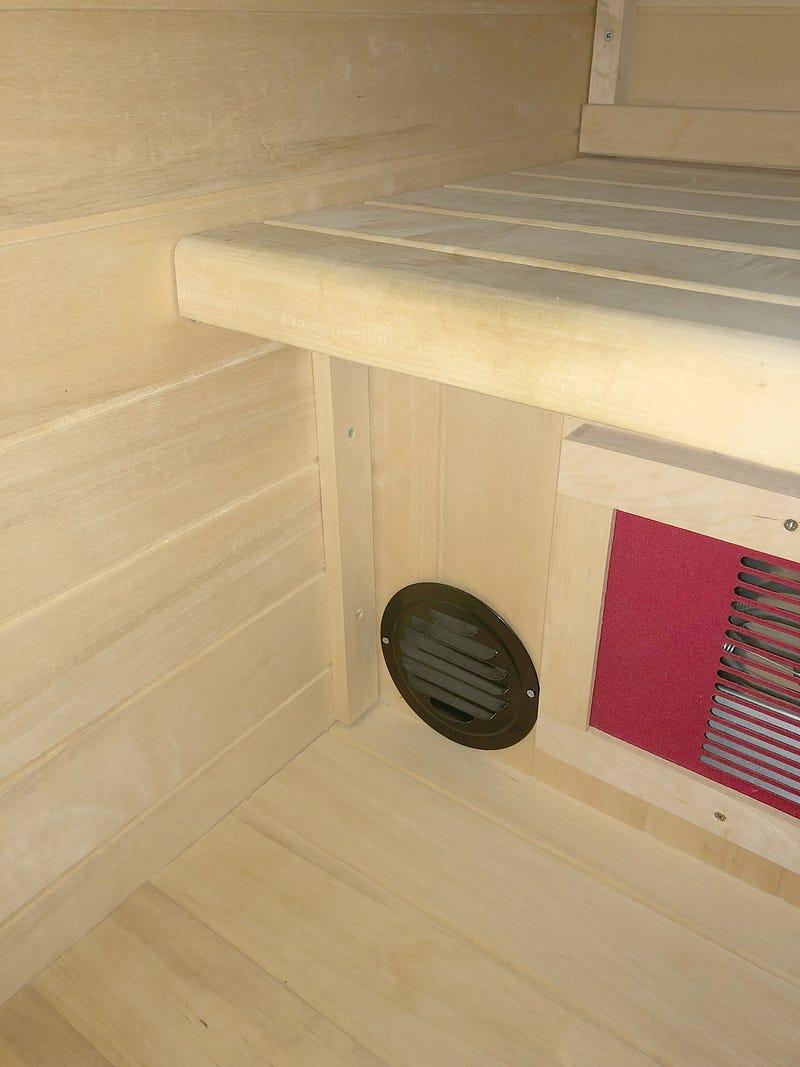
I added three 4" vents (one adjustable for fresh air 18" above the heater, one louvered vent just below the bench with the CPU fan mounted behind the vent. The bench cavity then vents out the back-side through another adjustable 4" vent). This allows for adjustable airflow which brings in fresh air directly above the stove, warms the air, then draws that warm air toward the bottom of the box on the opposite side from the heater. This gives the best possible high-to-low circulation.
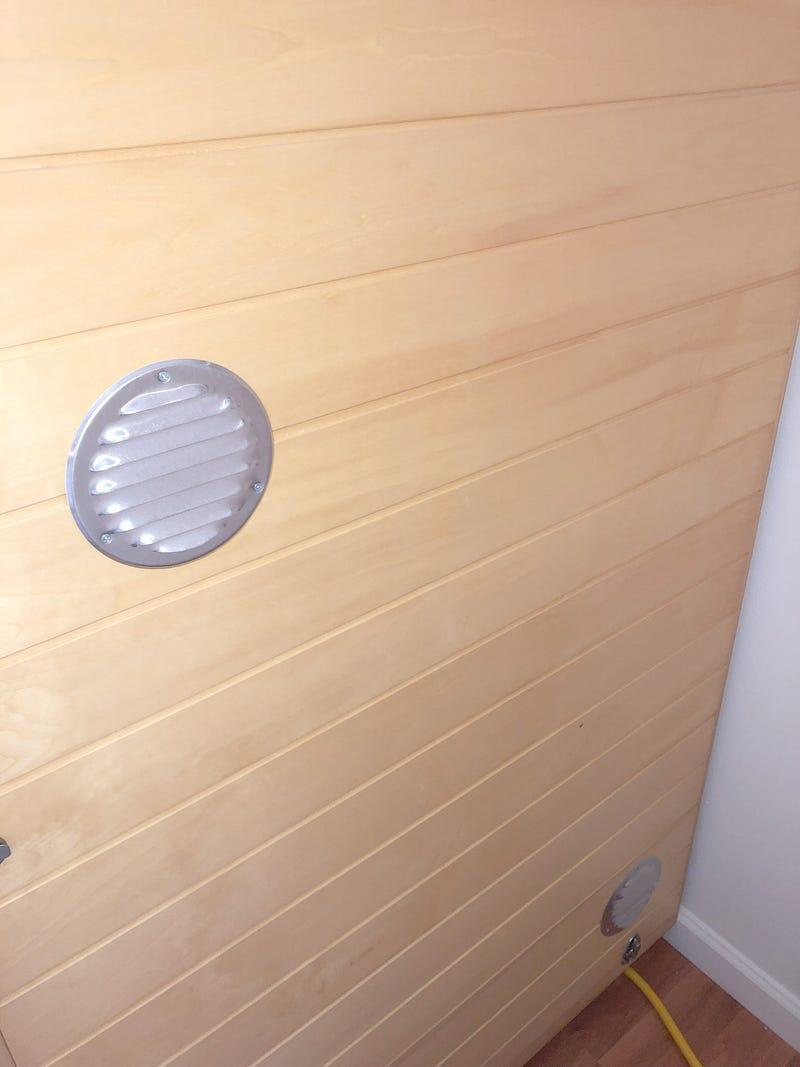
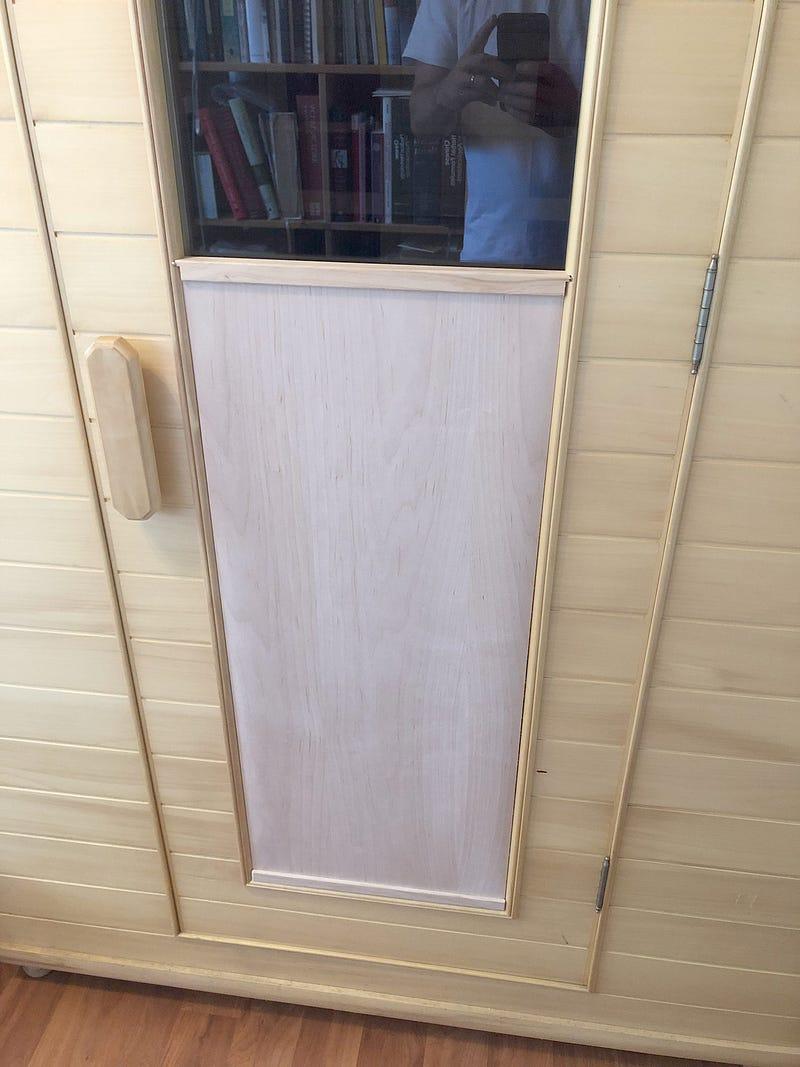
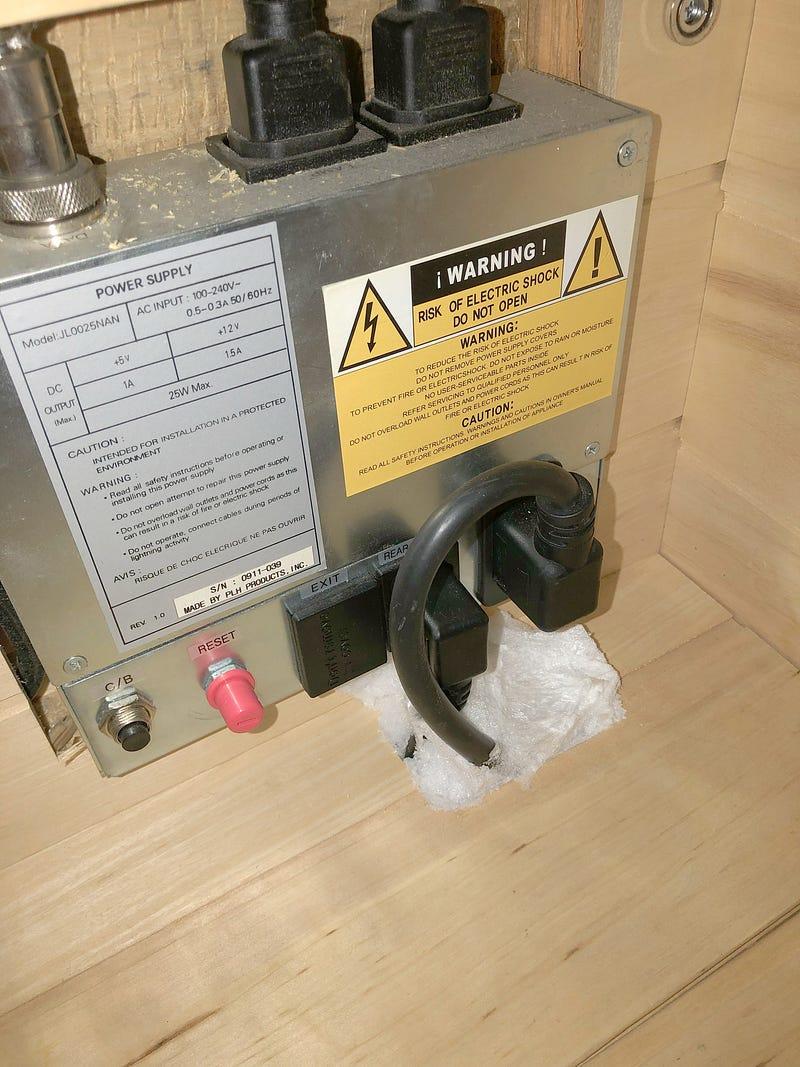
I sealed any drafty areas of the infrared sauna box and insulated several areas. The floor wiring hole was sealed with Loctite foam. The door glass was partially insulated with 1/2" insulating foam. The light in the ceiling was covered with 1/2" insulating foam. The existing ceiling exhaust fan was covered with 1/2" insulating foam.
Here are the things I found out:
The mounting brackets for the Harvia Vega absolutely do not fit and must be modified
By “modified” I mean cut with metal shears and filed with metal files. I spent hours trying to assemble it the way the manual describes out of the box, and it was clearly impossible. I carefully used metal shears to reduce the rear tab size so it would slip over the mounting bracket.
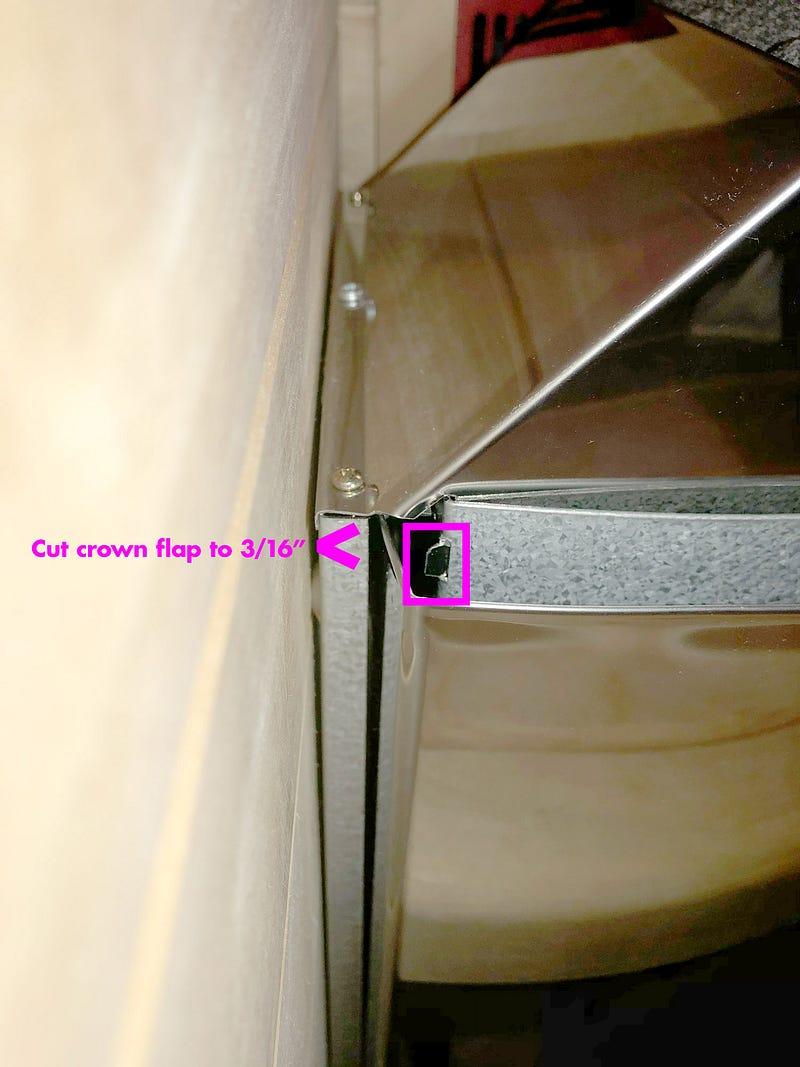
The ‘top crown’ flap/ears must be made smaller to fit inside the small mounting slots. I just don’t see how this can fit without making these tabs slightly smaller.
The back of the top crown must be sheared off in order to be able to pop over the wall bracket. The stock screw hole must be drilled out to actually fit the top crown. Again here, there is absolutely no way the die for these items is accurate from the factory. I also drilled two more holes for mounting strength/safety to connect the top crown to the extra tabs on the mounting bracket.
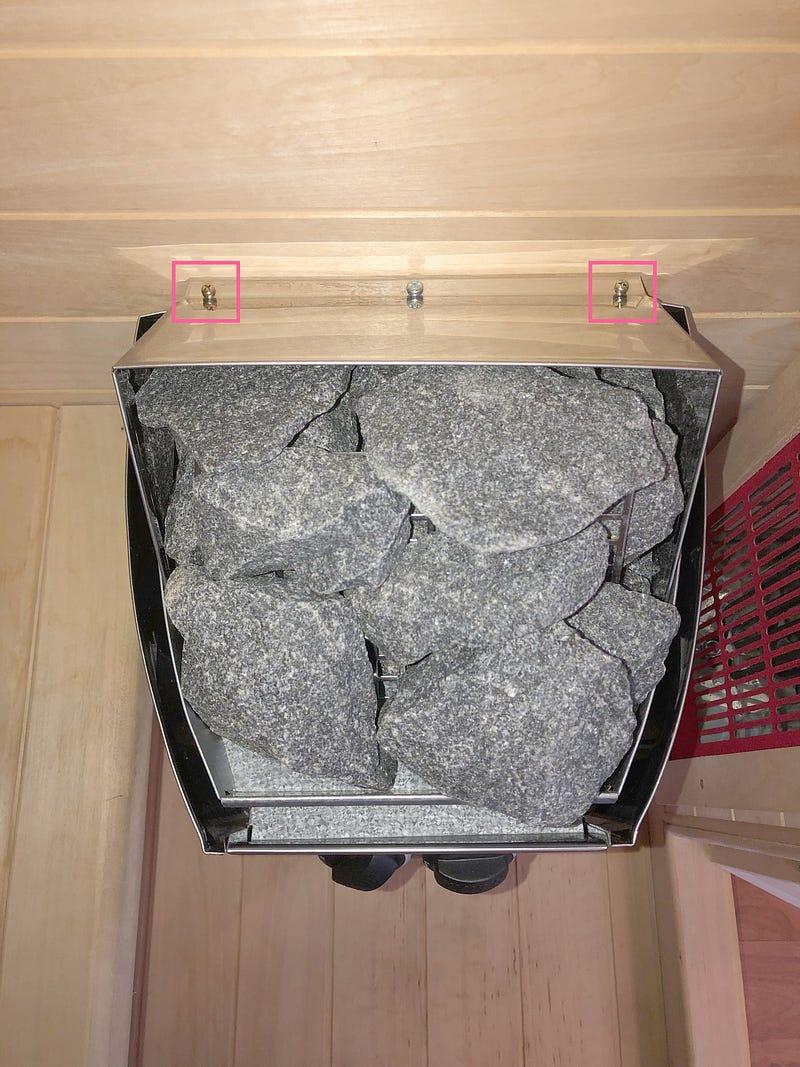
The package was missing a terminal jumper
So I built my own with pure copper sheet roll and soldered using 63/37 with tinning flux. I also built a spade connector for the ground wire with the same technique.
Conclusion
I would estimate labor time on this project to be about 20 hours. You could probably save 6 hours here or there if you want to hack it together quicker—but then it’s not as crispy and your wife will judge you every single time she roasts her meat—not ideal. The 20 hours of labor does not include the four months of waiting/shipping/refund/exchange time for the sauna heater.
In the end, this thing cranks. It’s awesome! The heater is beautiful and efficient. I recommend this setup 100% with confidence and a big smile. I have a traditional dry sauna that plugs into the wall in my home office, right next to my stand up desk. My wife loves it. My mother-in-law loves it. Visitors love it. It’s just great.
170ºF takes about 1 hour and 20 minutes to heat up. Once at temperature, it maintains temp with very little energy due to the rocks being a great thermal store. I don’t believe much above 185º is possible due to the heater’s internal thermostat cutoff.
I hope this post helps others out there who may be timid to complete a similar project. I searched high and low for some decent installation instructions and found absolutely nothing. If you’re thinking about building a custom enclosure around the same heater, I would recommend building the smallest box that will still be comfortable for you. I believe if you run this same heater as 220V 2-phase, it’s 3.5KW so it might support a much larger box. I’m just on 110V so I can’t say for sure what the difference in heat output would be, but I’m sure Harvia customer support would be happy to help you figure out the problem.
Full parts list:
- Harvia Vega Compact 1.9 KW heater (use discount code BELK for 7% off)
- Sauna thermometer
- 10 gauge extension cord
- CPU fan
- Circuit breaker 20A
- Ferrule crimper
- Din rails
- Terminal blocks/bus
- 3/4" flex conduit and 90º connector
- Copper sheet roll
- 67/33 solder and tinning flux
- Screw vents
- Louvered vents
- 4" hole saw
- Birch veneer strip (for inner of vent holes)
- Wood glue
- Loctite foam